Preventing Rock Chips with Paint Protection Film
Ceramic coating is a liquid polymer applied to a car's exterior. Unlike traditional waxes or sealants, ceramic coatings chemically bond with the car’s factory paint, creating a durable layer of protection. This coating shields the vehicle from environmental hazards like UV rays, bird droppings, acid rain, and road salt. It also provides a glossy, mirror-like finish, making your high-performance sports car look as good as new for longer.
We live in a tech-driven world, so it only makes sense we’d demand the highest level of technology from everything we purchase - even window tint! Likely the biggest advancement in this space is the introduction of nano-ceramic particle technology.
The word “ceramic” admittedly is a buzzword in the automotive and detailing world, but the hype is real when it comes to its implementation in window film. The benefits include superior UV and infrared (heat) rejection, greater clarity, and zero interference with electronic devices, as there is no metal in the film.
At Exquisite Auto Spa we install XPEL PRIME XR Plus window film, which features this ceramic particle technology. We also utilize XPEL’s Design Access Program (DAP) software, which is the world's largest and most comprehensive pattern repository for window tint patterns. Coupled with our in-house cutting machine, we are able to tackle jobs quickly and easily, while ensuring the best fit-and-finish for your vehicle.
Hard Rock Hits in the Automotive Industry
While this does not have to do with the rumble of a bass guitar or the crack of a snare drum, it does have to do with those similar sounds being delivered by a pebble ricocheting off your quarter panel or a rock skimming across your hood before leaving a spiderweb split in your windshield.
Automotive finish work has many elemental enemies in nature: bird droppings, rain residue, or corrosive road wash. But the one that always takes us by unpleasant surprise is rocks. Chips in our finish caused by airborne stones on the highway happen to us all at one time or another; however, many wear these badges of destructive honor either for fear of spending excessive amounts of money to correct a small discrepancy, or they assume it will go unnoticed.
The truth of the matter is that rock chips create divots in your finish, exposing an automotive flesh wound to all of those other elemental enemies previously mentioned. Much like a cut on your hand, over time, rust will develop and spread like a bacterial infection, gauging the resale value of your car and devolving your ride into a four-wheeled eyesore.
With several detailing products on the market today, one that is top-notch yet frequently misunderstood is Paint Protection Film (PPF), a thermoplastic urethane film applied by a detailing professional to all painted areas of a vehicle.
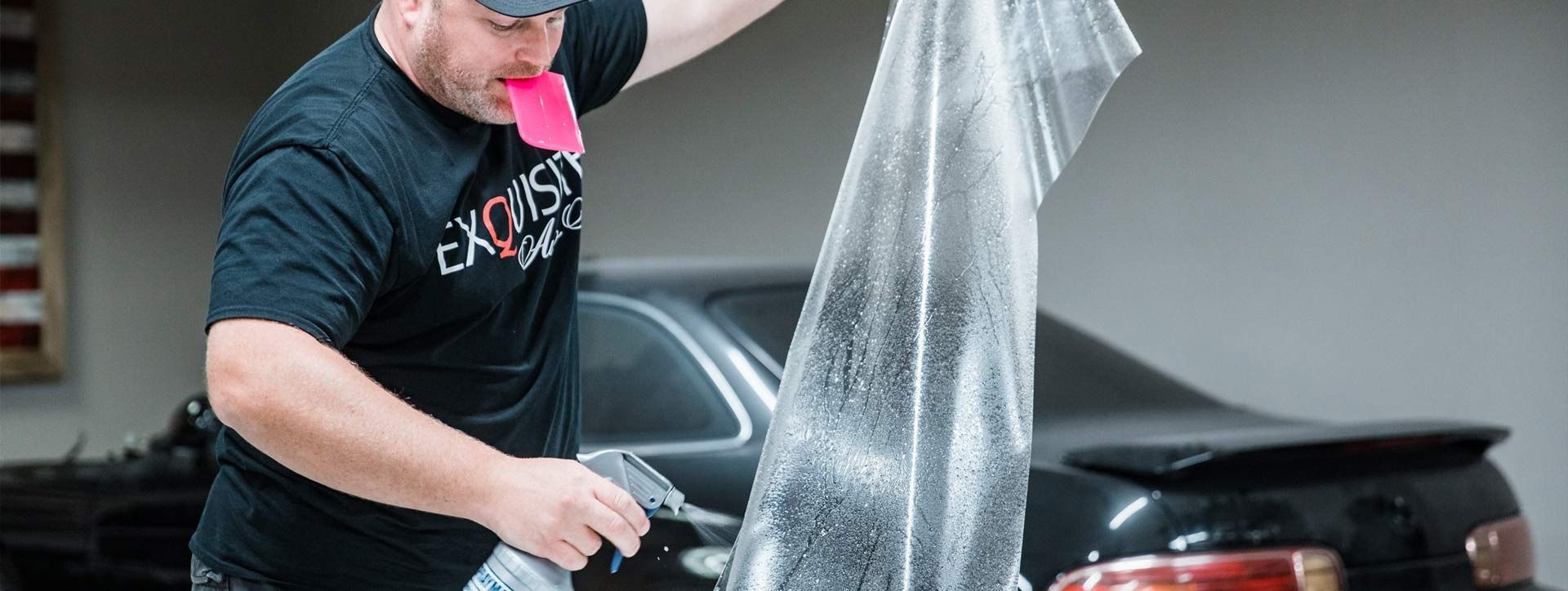
Built for battles with rocks and road debris
PPF may sound elaborate, but the technology is quite simple and built to last. This protective product’s origin dates back to the Vietnam war, as 3M developed it for use by the United States Department of Defense to protect sensitive military equipment from damage inflicted by battle shrapnel.
The first iterations of PPF were not engineered with the future of automotive detailing in mind, as many initial drafts were dull in color and stoically referred to as “helicopter tape.” However, as the automotive industry adopted the technology over the years through both protection for race cars and eventually consumer products, more attention was paid to finish work, arriving where we are today with the level of resilience coupled with a clear, glass-like appearance.
Ceramic coating is a liquid polymer applied to a car's exterior. Unlike traditional waxes or sealants, ceramic coatings chemically bond with the car’s factory paint, creating a durable layer of protection. This coating shields the vehicle from environmental hazards like UV rays, bird droppings, acid rain, and road salt. It also provides a glossy, mirror-like finish, making your high-performance sports car look as good as new for longer.
Increased Safety
Better Gas Mileage
Let PPF Do The Work
The real benefit of PPF regarding an elemental enemy as startling and damaging as rocks is the self-healing topcoat at work. Because rock chips are generally light and overlooked more as an annoyance, this feature prevents you from needing to address every single stone that collides with your vehicle.
You may be wondering: how exactly does a finish self-heal? That topcoat consists of an elastomeric polymer substance continually fighting to maintain its original shape. Therefore, not only does it fit seamlessly over the original finish and contour of the vehicle, adhering tightly to each unique curve of your car’s body, it resists chips, marks, and light scratching.
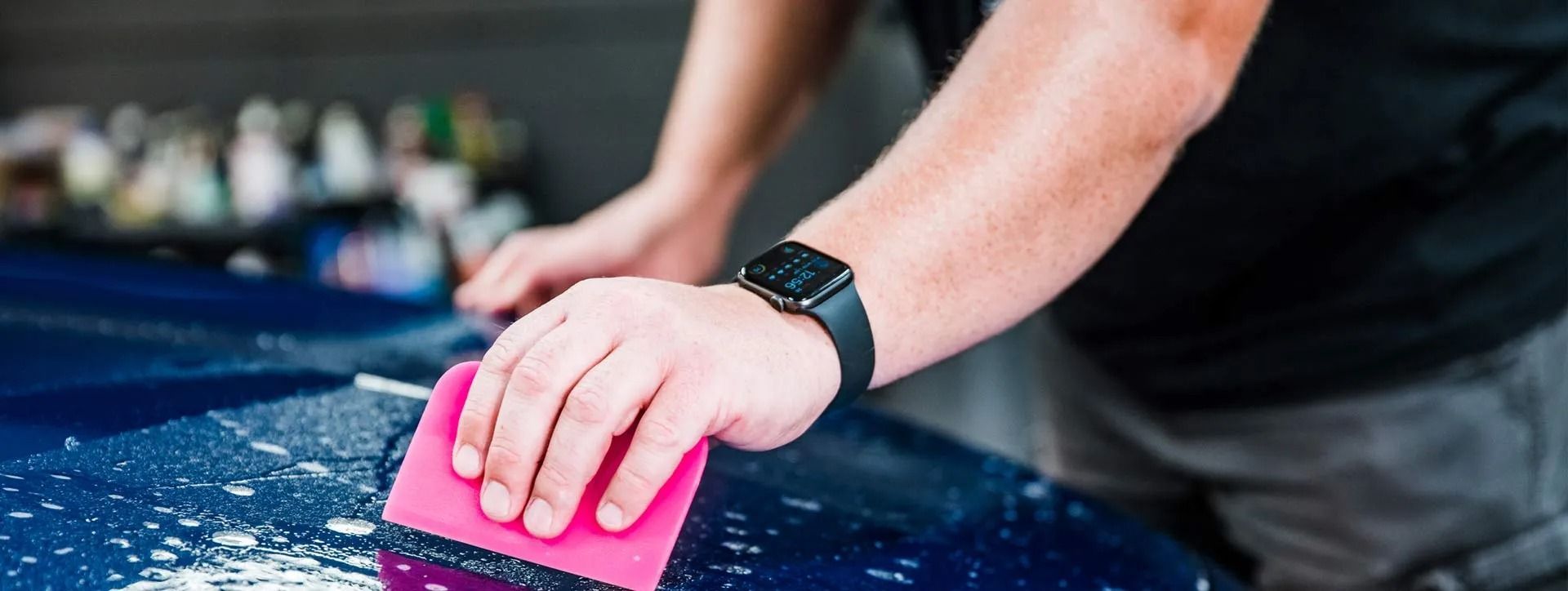
Ceramic coating is a liquid polymer applied to a car's exterior. Unlike traditional waxes or sealants, ceramic coatings chemically bond with the car’s factory paint, creating a durable layer of protection. This coating shields the vehicle from environmental hazards like UV rays, bird droppings, acid rain, and road salt. It also provides a glossy, mirror-like finish, making your high-performance sports car look as good as new for longer.
Increased Safety
Better Gas Mileage
Different Genres of Protection
With a better understanding of what PPF is and what type of protection you are looking for when having your detailer install PPF, you can better budget for this level of intricate automotive protection and ensure you are achieving the desired result.
The different lines of PPF include Rock Chip Protection, Clear Bra, Clear Mask, Invisible Shield, and more. The advantages and disadvantages of PPF vary depending on which line you choose to implement. Some can last up to ten years, while others may need immediate replacement after a certain level of surface damage.
Consider PPF for your vehicle today, so the next time you hear a percussionist of rocks and stones playing a drum solo on your car, it has the chance to fight back with military-grade self-healing protection.
Be sure to contact Exquisite Auto Spa for more information about rock chip protection, installation of different Paint Protection Films, and advice about other methods of preventative finish care for your vehicle today.
Recent Posts